What Corporate Wellness Programs Cost in 2026 (and How to Budget for One)

- When it comes to corporate wellness programs, there's no single industry-standard cost. Pricing depends heavily on scope and delivery model.
- Most employers already offer some form of wellness program, so the real question is which tier fits your team, not whether to offer one at all.
- Some wellness incentives are tax-deductible for the employer, but not all incentives are tax-free for the employee, which trips up a lot of first-time budgets.
- Consolidating point solutions into one platform is often cheaper than stacking separate vendors.
What Corporate Wellness Programs Cost in 2026 (and How to Budget for One)
Search "corporate wellness program cost" and you'll land on a handful of vendor blogs, each with a confident-sounding number. What those numbers usually are, once you look closely, is that vendor's own pricing, dressed up as an industry benchmark.
The real answer is less satisfying: it depends on what you're actually building. In this guide, we’ll breakdown the real cost components, typical ranges by program type, and how to budget without either underfunding a program into irrelevance or overpaying for tools nobody uses.
What Actually Drives the Cost of a Wellness Program
The cost of a corporate wellness program depends on three things: delivery model (digital-only versus full-service), scope (a single benefit versus multiple wellbeing pillars), and company size. There's no universal number because these three variables can combine in wildly different ways.
Underneath those variables, you're really paying for three separate things, even if a vendor's pricing page blurs them together:
- Platform and admin fees. The cost of the software itself, usually billed per employee per month (PEPM).
- Actual spend, or incentive dollars. The budget or stipend that goes directly to employees, separate from the platform fee.
- Add-ons. Coaching, biometric screenings, and other services layered on top of the base program.
Most of the meaningful cost sits in the second bucket, not the first. A platform fee buys access. The incentive dollars are what actually reach people's lives, and they're the line item most budgets underfund first when costs need to come down.
Typical Cost Ranges by Program Type
These ranges come from publicly listed vendor pricing, not independent research, so treat them as a starting point for conversations rather than a benchmark to hold any specific vendor to.
- Basic digital wellness platforms (content and challenges only, no incentive budget) tend to run on the lower end, often just the platform fee with little or no per-employee spend attached.
- Mid-tier programs with incentives or stipends add a meaningful per-employee budget on top of the platform fee, since the incentive dollars are what drive actual participation.
- Full-service programs with coaching, biometric screenings, or EAP access layer additional per-employee or per-service fees on top of both of the above.
The difference between the cheapest and most expensive version of "a wellness program" is enormous, which is exactly why a single clean number doesn't exist.
Point Solutions vs. a Consolidated Platform
Here's where most budgets bleed money, often without getting noticed: a standalone recognition tool, a separate wellbeing vendor, and a separate stipend or gifting platform each carry their own platform fee. None of those fees show up on a single line labeled "wellness." They hide across three or four different invoices that nobody's adding up.
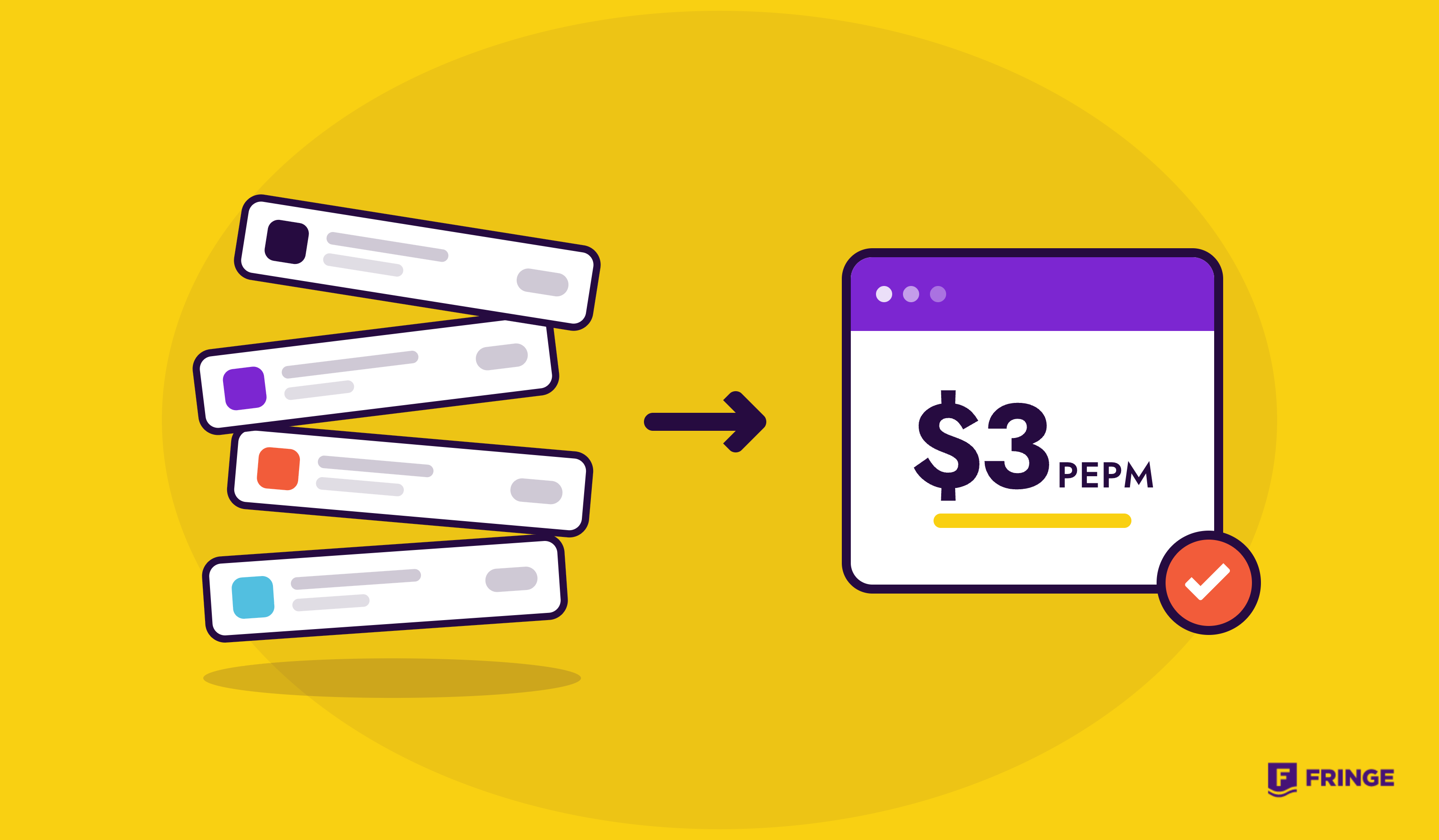
For reference, recognition-only tools often run around $5 per employee per month. Wellbeing-specific vendors frequently quote $8 to $12 PEPM. Add a separate stipend or gifting tool and a swag store on top, and stacked point solutions can run $20 to $30 PEPM before a single incentive dollar reaches an employee.
That's not because these tools serve different purposes. Recognition, wellbeing, swag, and gifting all exist for the same underlying reason: to help people feel valued, connected, and cared for at work, which drives the same retention and engagement outcomes either way. Paying for four separate platforms to accomplish one goal is the actual cost inefficiency, not the size of any single vendor's price tag.
Fringe runs all of it – wellbeing, recognition, swag, gifting, and learning – on one platform for $3 PEPM (free if your company runs on ADP Workforce Now), which puts more of the budget toward what employees actually receive instead of toward software licenses.
How Company Size Changes the Budget
Company size shapes both scope and expectations. Smaller companies tend to start with a leaner, single-focus program, often just a stipend or a single wellbeing benefit. Larger companies more often bundle screenings, coaching, and incentives into a fuller program.
Wellness programs themselves are close to standard at this point. 83% of large firms and 56% of small firms already offer some form of wellness promotion program, according to KFF's 2025 Employer Health Benefits Survey. For most companies, the budget conversation isn't whether to fund a program but which tier actually fits the team.
Is a Corporate Wellness Program Tax Deductible?
Employers can generally deduct the ordinary cost of running a wellness program as a business expense. What's more nuanced is how the benefit is treated on the employee's side: cash and cash-equivalent incentives, like gift cards or cash bonuses, are generally taxable to the employee, while certain non-cash benefits may qualify as excludable fringe benefits under IRS rules.
The details matter enough that this isn't a place to guess. IRS Publication 15-B covers the tax treatment of fringe benefits in detail, and a tax professional should confirm how any specific incentive structure applies to your company. Because this article doesn’t serve as tax advice, asking "is this taxable" is worth finding out before a budget gets built around an incentive structure that turns into owing payroll tax.
Building a Wellness Program Budget That Doesn't Overshoot
Start with a per-employee budget range that fits your company's size and goals, not a number pulled from a competitor's benefits page. Then, sort cost components into must-haves and nice-to-haves. A real incentive budget is usually a must-have, since that's the part employees actually feel, while add-ons like biometric screenings can wait until there's a clear reason to add them.
Revisit spend based on participation data, not assumptions. A program that's underused at $50 per employee per year won't magically perform better with a bigger number attached if the real problem is awareness or access, not budget. For a broader look at how wellness spend fits into total benefits costs, see our guide to the cost of employee benefits.
Getting More Value Per Dollar Spent
The biggest cost inefficiency in most wellness budgets isn't the sticker price of any one vendor. It's paying for three or four partially-used platforms instead of one that employees actually engage with. Consolidation doesn't just simplify vendor management; it frees up real dollars to put behind the incentive side of the program, which is the part that actually reaches people.
See how Fringe's pricing model compares once wellbeing, recognition, and swag stop living on separate invoices. Or, request a demo to see what a consolidated budget could look like for your team.
FAQs
How much does a corporate wellness program cost?
There's no single standard number. Cost depends on delivery model, scope, and company size, and can range from a modest per-employee platform fee for a basic digital program to $20 to $30 or more per employee per month when multiple point solutions are stacked together.
How much do companies spend on wellness programs?
Spend varies widely, but the biggest driver isn't the platform fee, it's the incentive or stipend dollars that actually reach employees. Programs that spend enough on the incentive side to be genuinely useful tend to see stronger outcomes than programs that spend most of their budget on software licenses alone.
Are corporate wellness programs tax deductible?
Employers can generally deduct the ordinary cost of running a wellness program. Employee-side tax treatment is more nuanced: cash and cash-equivalent incentives are typically taxable to the employee, while certain non-cash benefits may be excludable. Confirm specifics with a tax professional and IRS Publication 15-B.
What's included in a typical wellness program budget?
A typical budget includes platform or admin fees, the actual incentive or stipend dollars that go to employees, and any add-ons like coaching or biometric screenings. Most of the meaningful budget should go toward the incentive dollars, since that's the part employees directly experience.
Is it cheaper to build a wellness program with one platform or several vendors?
Consolidating onto one platform is usually cheaper than stacking separate point solutions, since each standalone vendor (recognition, wellbeing, swag, gifting) carries its own platform fee. Combining them frees up budget to put toward incentive dollars instead of duplicate software costs.