"So, What'd You Get?" The Conversation Your Holiday Gift Should Start

- A gift has three acts: the waiting, the opening, and the telling. Most corporate gifts skip the third one entirely.
- Conversation requires difference. When everyone gets the same thing, nobody asks what you got.
- A shared catalog with many choices creates both common ground and variation, which is exactly what gets people talking.
- Personalization only fails to scale when the company does it. Hand it to the recipient and the math flips.
Remember the first day back at school after winter break?
Nobody talked about the lesson plan. Everybody talked about what they got. The new skateboard, the video game, the sweater from Grandma that we all agreed to never discuss again. That conversation was half the fun. Maybe more than half.
Somewhere between the classroom and the company holiday gift, we lost that part.
Every Gift Has Three Acts
A good gift plays out in three acts:
- The waiting. The run-up, the anticipation, knowing something's coming.
- The opening. The actual moment.
- The telling. The "so, what'd you get?" conversation afterward.
Most companies attempt one of these acts (the opening), do it with a uniform item, and then wonder why it doesn't land. Act three never even starts.
Conversation Requires Difference
Here's why. If everyone got the same mug, the answer to "what'd you get?" carries no information. So the question never gets asked. The conversation doesn't die from a lack of interest. It dies because it's already been answered.
A matching gift has another side effect: it makes you less distinguishable from the person sitting next to you. It marks you as a member of a set. That's exactly what you want from a team jersey. It's the opposite of what a holiday gift is supposed to do. (It's the same reason nobody can out-guess the person opening the gift.)
What They're Really Asking
This is the part worth slowing down for.
When a coworker asks what you picked, they're not asking about the object. They're asking about you. A choice is a small self-disclosure.
You find out the quiet guy in finance is a serious home cook. That the new designer is deep into her garden. That the CEO has surprisingly strong opinions about flossing.
That's something no employer could ever manufacture directly. A company can't be intimate with 400 people. But it can create an occasion where 400 people become slightly more known to each other. That's not a workaround for the "we don't know our people well enough" problem. It's a better answer than the one the company was reaching for, and it happens without a single icebreaker.
The Shared Catalog Is the Secret
It's easy to miss what makes this work, so let's spell it out. A conversation needs two ingredients: common ground and variation.
- Same gift for everyone: plenty of common ground, zero variation. Nothing to talk about.
- Cash: total variation, no common ground. Also nothing to talk about. Nobody's asking what you spent your bonus on.
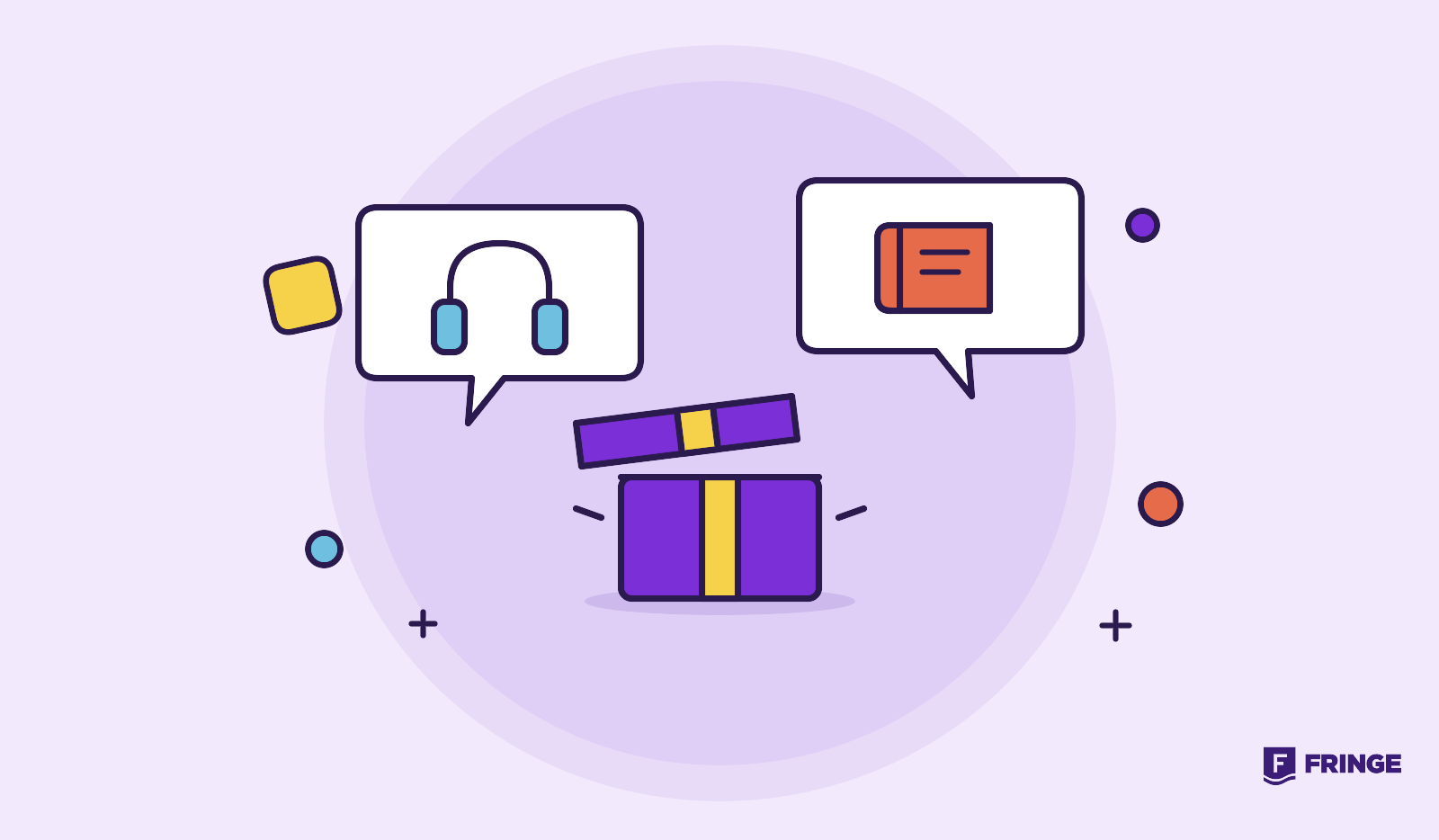
- One catalog, many choices: a shared starting point and a different answer from everybody.
That last structure is the one that produces talk. Everyone picked from the same collection, so there's a reason to compare. Everyone picked something different, so there's something to say.
Personal vs. Scalable Was Always a False Choice
Most HR teams assume personal and scalable are opposites. Make it personal and it won't scale. Make it scale and it won't feel personal.
That tradeoff only exists when the company does the personalizing. Done centrally, personalization is manual labor that scales linearly with headcount. Every new hire is one more person to research, one more guess to get wrong.
Move the personalizing to the recipient and the math inverts. Every new hire arrives with the labor already included. Five hundred people, five hundred perfectly personal gifts, and nobody in HR had to guess at a single one.
And people notice the difference. In Custom Ink's 2025 Employee Holiday Gift Survey, 82% of employees said they'd value a gift more if it felt personalized. Personal doesn't have to mean you picked it. It can mean they got to.
Design for Act Three
If you're planning a holiday gift this year, add one question to the list: what will people say to each other about this in January?
If the honest answer is "nothing, because they all got the same thing," you've planned an opening, not a gift. Give people a real choice from a shared collection, and you get the whole story: the waiting, the opening, and the best part, the telling.
That's the idea behind Personalized Holiday Gifting, new at Fringe this season. The company sets the budget, everyone chooses from the same curated collection, and the "what'd you get?" conversation takes care of itself.
FAQs
How do you make employee holiday gifts feel personal?
Let each employee choose their own gift from a shared, curated collection. When the recipient does the choosing, every gift is personal by default, without HR having to research or guess what hundreds of different people want.
Why don't matching company gifts get people talking?
Conversation requires difference. When everyone receives the same item, asking what someone got carries no new information, so the question never comes up. A shared catalog with many choices gives people common ground and different answers, which is what starts a conversation.
Can personalized holiday gifts work for large teams?
Yes. Personalization only struggles to scale when the company does it, because the work grows with every new hire. When employees pick their own gift, a team of 50 and a team of 500 are equally easy, since each new person arrives with the choosing already included.
Do employees value personalized gifts more?
Most say they do. In Custom Ink's 2025 Employee Holiday Gift Survey, 82% of employees said they would value a gift more if it felt personalized.