The Best Employee Recognition Software Platforms in 2026

- Strong recognition platforms keep people using them month after month. Weak ones create a burst of excitement at launch and then fade.
- Reward choice is what sustains usage. When employees can redeem recognition for something they actually want, they keep coming back.
- The main buying criteria are peer and manager recognition, reward flexibility, Slack and Teams integration, milestone automation, budget controls, reporting, and global support.
- Lightweight Slack-first tools fit small teams, enterprise suites fit formal service-award programs, and all-in-one platforms fit companies that want recognition and rewards in one place.
Why does so much recognition software launch strong and then fade? Everyone's excited for a month. Managers send shoutouts and the feed lights up. Then usage quietly drops off, and you're paying for a really pretty tool on the shelf.
This guide covers what separates the platforms that last from the ones that fade, the questions to ask in a demo, and a shortlist for 2026.
What Is Employee Recognition Software?
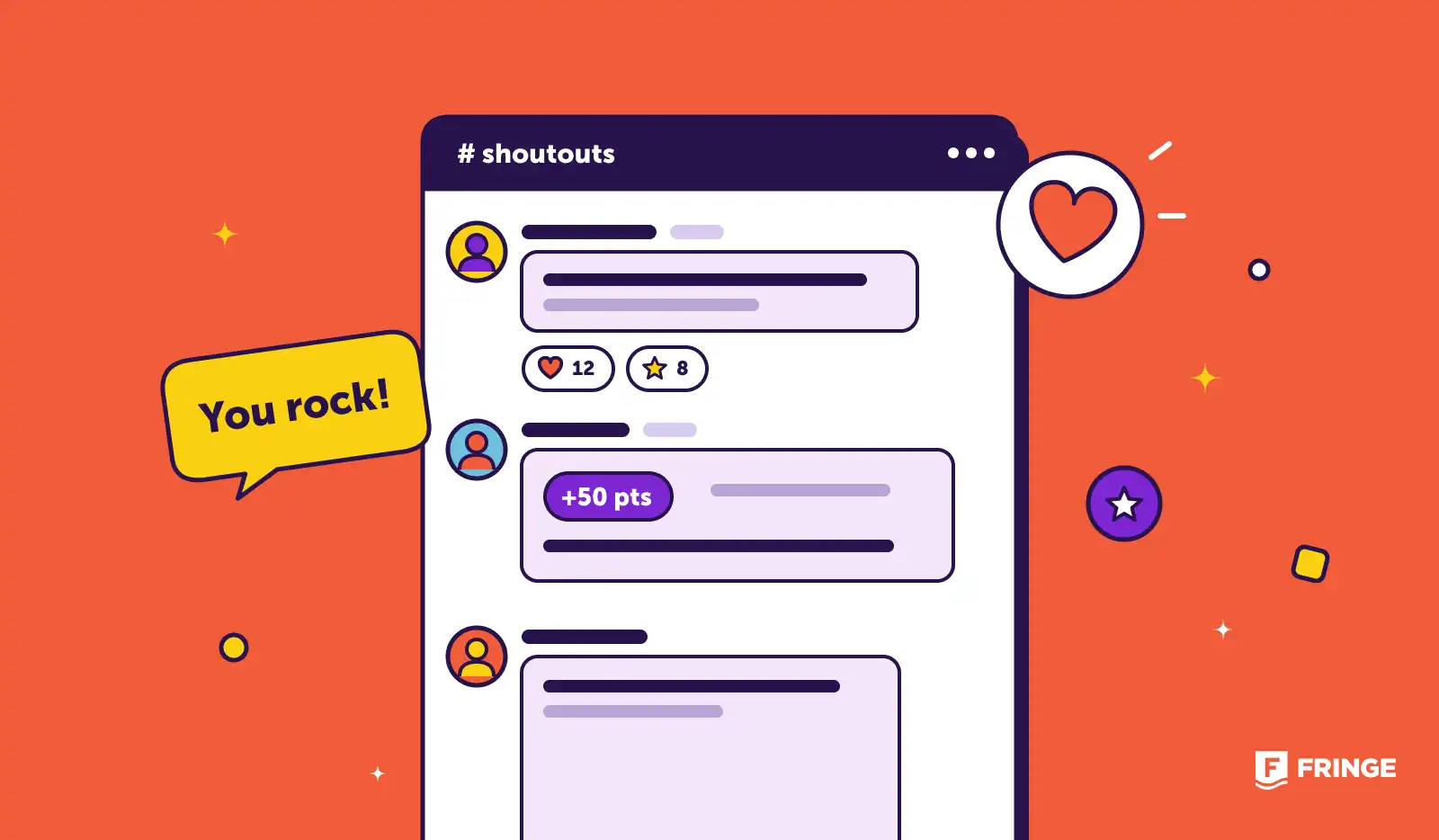
Employee recognition software is a platform that lets coworkers and managers publicly thank and reward each other for great work, milestones, and living company values. Most tools combine a recognition feed, points or rewards employees can redeem, automated birthdays and anniversaries, and reporting, often inside Slack or Microsoft Teams.
The hard part isn't sending the first recognition. It's whether anybody's still sending them in month six.
What to Look For in a Recognition Platform
Almost every employee recognition platform will check the same boxes on a feature comparison chart. That's exactly why the chart doesn't help you much. Here's what I'd actually look at, and why.
Peer and manager recognition. You need both. Peers create the volume, because they see the work managers miss. Managers create the weight, because hearing it from your boss lands differently. A tool that makes either one feel like extra work will lose half your program.
Reward choice and flexibility. This is the one I'd push hardest on. Watch out for the "we have thousands of options" pitch. Every time I walk into a Cheesecake Factory, I want to shut the menu as soon as I open it. There's way too much in there. It's decision paralysis. You're not known for anything because you serve everything. A giant catalog does the same thing to employees. What you want is real choice that's curated to the person, so they find something they want quickly and actually redeem it.
Slack and Teams integration. If it doesn't feel easy and familiar, it doesn't get used. Recognition has to live where people already work, not behind one more login.
Automation for milestones. Birthdays, work anniversaries, and service awards should never depend on someone's memory. Automate them so nobody gets skipped.
Budgeting controls. You'll want to set budgets by team, by manager, or by occasion, so recognition stays fair across teams.
Reporting. Look for participation and engagement trends by team, not just a total count of shoutouts. You want to know which teams are getting recognized and which teams aren't.
Global support. If you have people in other countries, make sure rewards actually work where they live.
I'd add two more that rarely show up on a checklist. First, read the fine print on rewards. Points can suddenly expire, there can be blackout dates, there can be hidden restrictions. Ask about every one of them. Second, look beyond recognition. Platforms that also handle challenges and incentives, gifting, and lifestyle benefits save you from stacking separate vendors that each charge their own fee.
And remember that software is a tool. The program still needs a plan. If you're starting from zero, here's how to build a recognition program before you pick the software.
The Best Employee Recognition Software for 2026
Here's my shortlist of the best employee recognition software, starting with our own platform (not meant to be self-promotional, but I'd be lying if I didn't put it first) and then the rest of the field by category and use case. Pricing is as listed publicly as of October 2026 and changes often, so confirm with each vendor.
1. Fringe: Best Overall for Reward Choice and Sustained Usage
We started Fringe in 2018 because benefits felt transactional instead of meaningful, and our rewards and recognition software is built to fix that. Peers and managers recognize each other in Slack and Teams, with or without points attached, and recognitions can be public or private. Birthdays, work anniversaries, and service awards are automated. Admins can set budgets by team, manager, or occasion, and see dashboards on participation and morale.
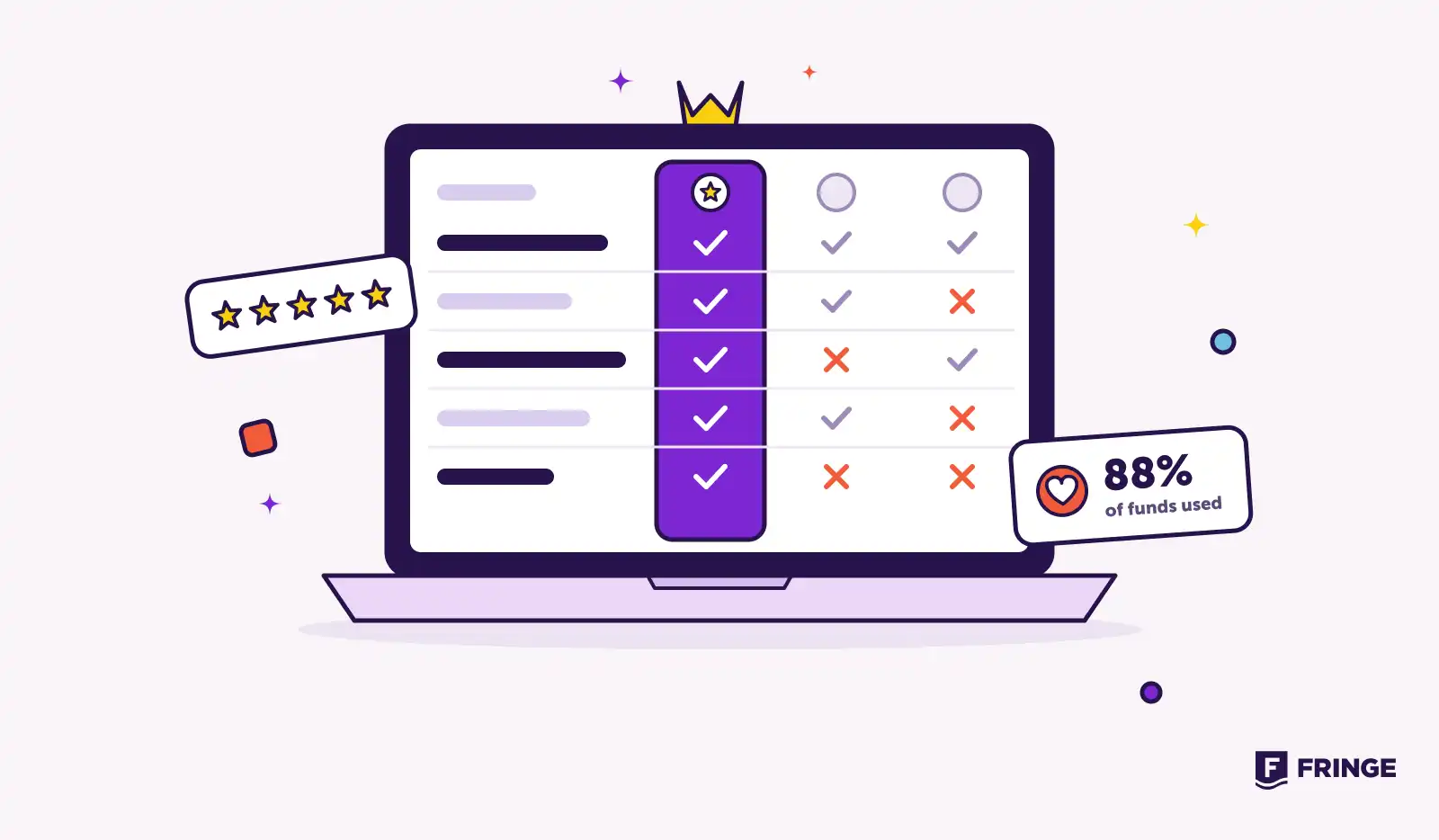
The difference is what the points turn into. Instead of a gift card catalog, employees redeem against hundreds of real choices: streaming, meal delivery, fitness classes, childcare, wellness, travel. Our marketplace learns what each person likes and shows them what's relevant, the way your Netflix looks nothing like mine. Fringe customers see 88% of the funds given to employees used within six months. And unless an employer specifically asks us to, we don't expire points. That's not what's financially best for us. It's what's best for the employee.
Recognition, lifestyle benefits, wellbeing, challenges, swag, and gifting are all included in one platform. Pricing is $3 per employee per month for teams under 1,000 and $2 for companies between 1,000 and 10,000, and you only pay for active users. If you're on ADP Workforce Now, Fringe-powered recognition is also rolling out inside ADP through ADP Connect. See Pricing.
Best for: Mid-market and enterprise companies that want recognition people keep using, and rewards that match the person receiving them.
2. Awardco: Best for Catalog Breadth
Awardco is built around a very large rewards network with a zero-markup model and redemption in more than 160 countries. Plans are organized around recognition types like automated, spot, and nomination programs. Small business pricing (100 or fewer employees) starts at $3,000; other tiers are quote-based.
Best for: Companies whose top priority is the size of the reward catalog.
3. O.C. Tanner: Best for Enterprise Service Awards
O.C. Tanner's Culture Cloud is a long-standing enterprise suite, especially well known for formal service and career milestone awards. It includes peer recognition, manager dashboards, AI-driven culture insights, and integrations with major HRIS and collaboration tools. Pricing is custom.
Best for: Large enterprises with established, formal service-award programs.
4. Achievers: Best for Large Global Enterprises
Achievers combines monetary and non-monetary recognition, nominations, and a global rewards marketplace with employee listening tools. It integrates with Slack, Teams, and Workday. Pricing is sales-led and custom.
Best for: Large, distributed enterprises that want recognition and engagement listening together.
5. Workhuman: Best for Enterprise Social Recognition
Workhuman centers on a social recognition feed, service milestones and life events, and manager insights, with rewards fulfilled locally in 150+ countries. Pricing is custom and scales with program size.
Best for: Global enterprises that want recognition tied closely to performance conversations.
6. Bonusly: Best for Peer Recognition (and Best Free Option)
Bonusly is a popular peer recognition tool that lives inside Slack and Teams, with an AI assistant, automated milestones, and a rewards catalog. Its Team plan is $5 per user per month with the AI assistant or $3 without, with rewards billed separately at face value. It's also the strongest answer if you're looking for free employee recognition software: Bonusly's free plan covers up to 8 users.
Best for: Small to mid-size teams that run on Slack or Teams. The free plan is a good way for very small teams to build the habit.
7. HeyTaco: Best for Lightweight, Playful Peer Recognition
HeyTaco lets people give each other tacos in Slack or Teams, with leaderboards, gamification, and a custom rewards shop. Classic is $3 per user per month and Deluxe is $5, which adds automated milestones and gift cards. It offers a 30-day trial rather than a free plan.
Best for: Startups and small teams that want something fun and fast.
8. Assembly: Best for Small Teams That Want Recognition Plus Culture Tools
Assembly (now Assembly by Quantum Workplace) offers peer recognition, points and budget controls, milestones, awards, and AI insights. Its Empower plan is $3 per user per month, billed yearly.
Best for: Small to mid-size teams that want recognition and simple culture tools in one place.
9. Recognize: Best for Microsoft 365 Organizations
Recognize is highly configurable and especially strong inside Teams, Outlook, and the rest of Microsoft 365, with badges, points, nominations, and HRIS sync. Pricing is custom by tier.
Best for: Microsoft-first organizations, including frontline and international teams.
10. Nectar: Best for Frontline and Deskless Teams
Nectar pairs peer and manager recognition with internal communications and listening, plus a mobile app and kiosk mode for people who don't sit at a desk. Pricing is custom.
Best for: SMB and mid-market companies with frontline or deskless workforces.
11. Motivosity: Best for a Social, Connected Feel
Motivosity mixes peer recognition, milestones, and spot bonuses with social connection features and lifestyle spending accounts. Pricing is custom, with a bundle for small businesses.
Best for: Mid-size companies that want recognition to feel like part of a social intranet.
12. Kudoboard: Best for Group Celebrations
Kudoboard isn't a full recognition platform. It's group cards and celebration boards for birthdays, farewells, and work anniversaries. Single boards start at $6.99, and business plans start at $25 per month billed annually.
Best for: Teams that mainly want great group cards, alongside another recognition tool.
Six Questions to Ask in Every Demo
Feature charts all look the same. These questions don't have the same answers.
1. What does usage look like at month six for a customer my size? Not month one. Month six. Ask for the actual number.
2. What percentage of points get redeemed? Points that sit unused are money that never reached the person it was meant for.
3. Do points ever expire? Are there blackout dates or restrictions? Get it in writing. Then ask what happens to an employee's balance when they leave.
4. What can employees actually redeem for? Ask to see the marketplace as an employee would, not the admin view.
5. Who handles launch communications? If the answer is "you do," plan for that. The launch is where most programs are won or lost.
6. What else will I still need to buy? If you'll still need a separate tool for gifting, swag, or wellbeing, add those fees to the comparison.
How to Choose the Right Platform for Your Team
There's no single answer to "what's the top employee recognition software." The best software for employee recognition is the one that fits your company. Here's how I'd match it.
By company size. Small teams that live in Slack can start with a lightweight peer tool. Mid-market companies usually outgrow those fast, once they need budgets, milestones, and rewards that work for everyone. Large enterprises often need global reward fulfillment and deep HRIS integration.
By budget. Look at the full cost, not just the software line. If you buy one tool for recognition, another for wellbeing, another for swag, and another for gifting, you're going to spend so much on software that far less goes straight to the employee. That's the stacking problem, and it's why all-in-one platforms are worth a look.
By goal. If your goal is a formal service-award program, an enterprise suite makes sense. If your goal is everyday recognition that changes your culture, prioritize ease of use, reward choice, and how the tool keeps people engaged past the launch.
Whatever you pick, plan your launch like it matters. If nobody cares because it wasn't communicated by the right people at the right time, repeatedly, with enthusiasm, it just doesn't go anywhere. No software fixes that for you.
Why Fringe Stands Out
Most of these tools can help you say thank you once. Keeping it going comes down to two things. First, the thank-you has to turn into something the employee actually wants, chosen by them, without fine print. Second, it has to happen where people already work, so it never feels like extra effort. That's what we built Fringe to do: recognition in Slack and Teams, rewards from a marketplace that knows the person, points that don't quietly expire, and everything else your people program needs in one place.
Want to see how that works for your team? Request a demo, or See Pricing.
FAQs
What Is the Best Employee Recognition Software?
The best employee recognition software is the one your team keeps using after launch. Look for peer and manager recognition inside Slack or Teams, rewards employees choose for themselves, automated milestones, and budget controls. Fringe leads for reward choice and sustained usage; enterprise suites fit formal service-award programs; lightweight peer tools fit small teams.
What Is the Best Recognition for Employees?
The best recognition is specific, timely, and tied to something that matters. Name what the person did and which company value it reflected, say it close to the moment it happened, and pair it with a reward they choose. "Thanks for staying late to rebuild that client's onboarding plan, that's exactly what we mean by owning the outcome" beats a generic "good job" every time.
Is There Free Employee Recognition Software?
Yes, but free options are limited. As of October 2026, Bonusly offers a free plan for up to 8 users. Most other recognition platforms offer free trials rather than free plans. Free tools can help very small teams build the habit, but growing companies usually need budgets, milestones, and rewards that free tiers don't include.
How Much Does Employee Recognition Software Cost?
Employee recognition software commonly costs about $3 to $6 per employee per month for the platform, with rewards budgeted separately. Enterprise platforms usually use custom pricing. Fringe costs $3 per employee per month for teams under 1,000 and $2 for 1,000 to 10,000, including recognition, lifestyle benefits, wellbeing, challenges, swag, and gifting.
What Features Should Employee Recognition Software Have?
Employee recognition software should have peer and manager recognition, Slack and Teams integration, points or rewards employees can redeem for real choices, automated birthdays and work anniversaries, budget controls by team or manager, and reporting on participation. Global reward support matters for distributed teams, and clear reward terms with no surprise expirations matter for everyone.