Rewards vs. Recognition: What's the Difference, and Why You Need Both

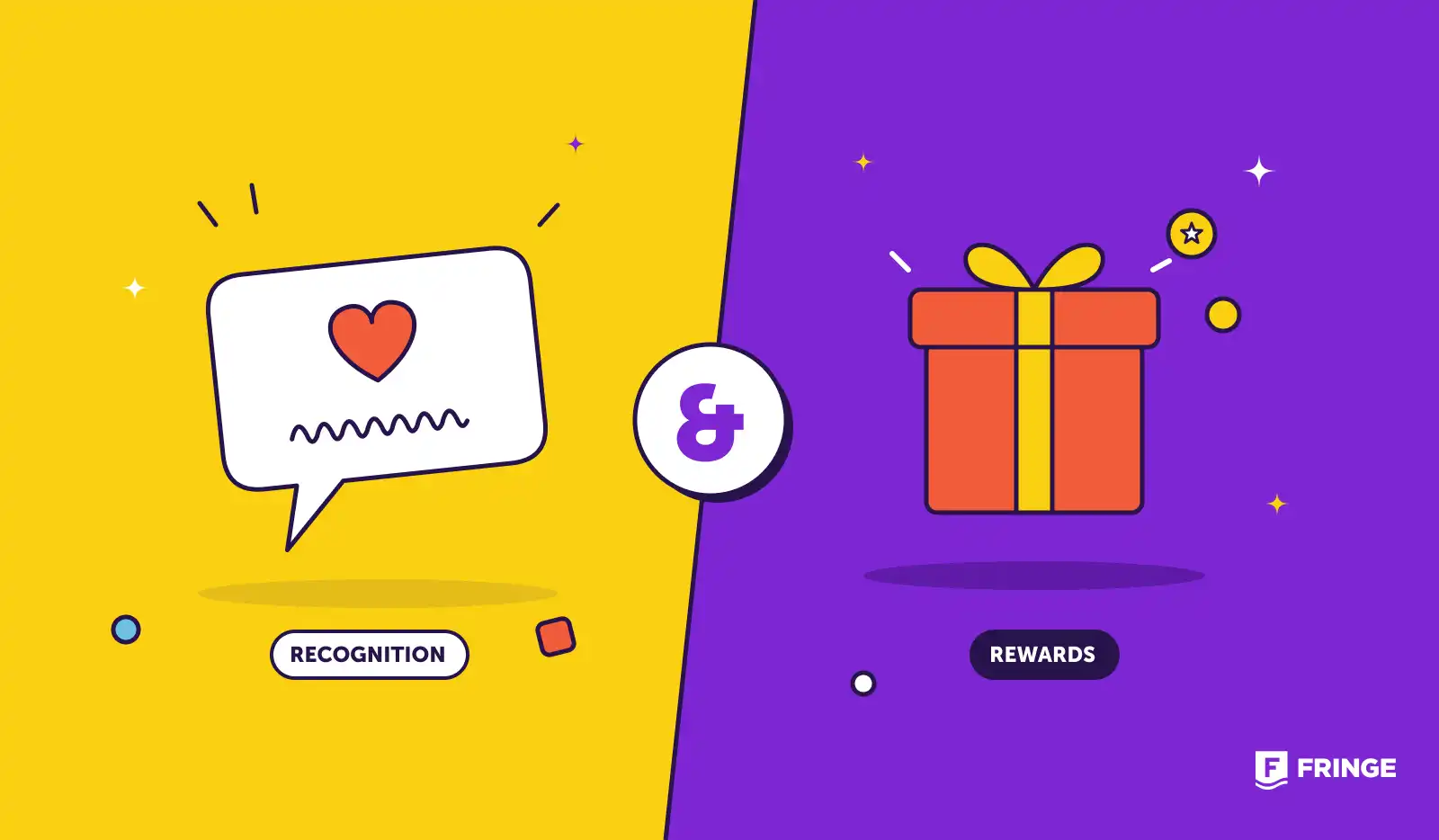
- Recognition is acknowledgment: telling someone, specifically, that you saw what they did and why it mattered.
- A reward is the tangible follow-through: points, a gift, time off, or an experience that makes the recognition stick.
- They work best together. Recognition creates the moment, and the reward makes it last.
- Choice is what makes a reward land. The right reward for one person is the wrong one for the next.
People use "rewards" and "recognition" like they're the same word. In HR they even get squished together into one acronym, R&R. But they aren't the same thing, and when you mix them up, you get a thank-you with nothing behind it, or a reward that feels like a transaction. Here's the difference, and how to use both.
What Is Recognition?
Recognition is acknowledging someone, specifically and often publicly, for what they did, how they did it, or who they are on the team. It names the behavior and why it mattered. Recognition can come from a manager or a peer, it costs nothing to give, and it's the foundation of employee recognition programs.
Recognition is great. Everybody wants to hear that they did a good job, that they're appreciated. But it works best when it's specific. I say "good job" to my three-year-old when he picks up his Legos and puts them in the box. And he did do a good job. He didn't exactly act with courage, though. At work, I'd rather hear "way to act with courage" than "good job" any day, because specific recognition tells you what's valued here.
It also comes from more than one direction. Manager recognition carries weight, and peer-to-peer recognition carries volume, because your coworkers see things your boss never will. If you want to build a full program around it, here's how to set up employee recognition programs that people actually use.
What Is a Reward?
A reward is something tangible an employee receives for their work or a milestone. Rewards can be monetary, like points, bonuses, or gift cards, or non-monetary, like extra time off or an experience. Rewards are a form of extrinsic motivation: they give appreciation weight beyond words.
Here's where rewards go wrong: when they aren't relevant to the person getting them. Am I really going to care about a plaque sitting on my desk that says I did a good job back in March 2026? Probably not. The relevance of the reward is what drives real engagement.
And the amount matters too. It matters how much you give, how often you give it, and what you give. A token reward can actually undercut the recognition it's attached to, because it tells people what the company thinks the moment was worth.
Rewards vs. Recognition: The Key Differences
So what does R&R mean in HR? It stands for rewards and recognition, two related but different ways of showing people they matter. Here's how they compare.
| Recognition | Rewards | |
|---|---|---|
| Purpose | Acknowledge what someone did and why it mattered | Give that acknowledgment tangible weight |
| Form | Words: a shoutout, a note, a callout in a meeting | Something you receive: points, a gift, time off, an experience |
| Timing | Best in the moment, as close to the work as possible | Best attached to the moment, or on milestones like anniversaries |
| Cost | Free | Requires budget |
| Emotional vs. tangible | Emotional: "I see you" | Tangible: "and here's something for you" |
Recognition says, "I see you, I acknowledge you." The reward finishes the sentence: "and I want to be generous to you." You need both halves.
Why Your Team Needs Both
Recognition and rewards always go in tandem, hand in hand. Recognition creates the moment. The reward is what makes it stick.
Recognition on its own is wonderful, but it's easy to forget by the end of the week. Rewards on their own are worse, because a reward with no story behind it is just a transaction. Nobody remembers why they got it. Put them together, and the moment means something and lasts longer than the meeting it happened in.
There's also a practical reason to pair them that HR teams don't talk about enough. Praise that's never recorded anywhere can quietly set expectations that don't match up at review time. Someone hears "you're crushing it" all year, then gets a middling review, and now they don't trust either one. When recognition carries points, it's on the record. A point sent is a point on the record.
And how the reward shows up matters as much as the reward. Did you ever meet anybody who just has the gift of gift giving? Those people who are thoughtful, who spend extra time wrapping the gift, and who are so excited to watch you open it? That's the energy a reward should come with. A reward dropped into someone's account with no note feels like payroll. The same reward attached to a specific thank-you from someone who noticed feels like being seen.
I also think we get too hung up on making everything "fair." Fair shouldn't mean everybody gets the exact same thing no matter what. Whether I do a great job or a terrible job, whether I've been here five years or five days, if everybody gets the same thing, why am I hustling? A good rewards and recognition program makes room for two things at once: benefits that say "we see you, life is hard, we want to help," and recognition that says "we specifically see the work you're putting in. Thank you."
If you need the statistical argument for somebody who doesn't have the intuition for it, there are stats to support it. ADP Research found that only 19% of workers are fully engaged. But among workers who strongly agree their employer is investing in them, 53% are fully engaged, compared with just 12% when that support is missing. Recognition is one of the visible ways a company shows it's investing in people. Rewards are how employees feel that investment for themselves.
Then there's choice, which is what makes the reward actually land. My co-founder says wellness, for him, is not having to pack up his three kids and drag them through the grocery store for an hour and a half. So he spends his points on grocery delivery. That's not the choice I'd make. For me, in different seasons, it's been somebody to cut my grass, a laundry service, or a trip. Everybody needs something different at different points in their lives. Don't treat everybody like they're exactly the same.
How to Combine Rewards and Recognition With Fringe
Offer the right thing, know your people, be generous. In practice, the simplest version of employee recognition and rewards working together is a specific note, paired with a reward the employee actually chooses. A few rules of thumb:
- Words first, always. The reward supports the message. It never replaces it.
- Match the reward to the moment. A quick assist gets a few points. A year-defining project gets something they'll remember.
- Let them choose. You can't out-guess the person receiving it, so don't try.
- Make it immediate. The reward should arrive with the thank-you, not in next quarter's batch.
That's how we built Fringe. A manager or a peer sends a recognition in Slack or Teams, names what the person did, and can attach points. The employee redeems those points in a marketplace with hundreds of real options: a massage, a streaming subscription, a week of groceries, a flight home to see family. Birthdays and work anniversaries are automated, so nobody gets skipped. And unless an employer asks us to, we don't expire points. When a company makes the brave choice to be generous, we want that value to get to the person it was intended for.
If you want recognition and rewards in one place, see how our rewards and recognition platform works, or request a demo.
FAQs
What Is Reward and Recognition?
Reward and recognition is how a company shows employees their work matters. Recognition is the acknowledgment: a specific thank-you from a manager or peer. Rewards are the tangible follow-through: points, gifts, time off, or experiences. Together, they make appreciation both meaningful and memorable, and they work best as one connected program.
What Are Some Examples of Rewards and Recognition?
Examples of recognition include a public shoutout naming a company value, a handwritten note from a leader, or a callout in a team meeting. Examples of rewards include points employees redeem for something they choose, a work anniversary gift, a spot bonus, or an afternoon off. The strongest examples pair a specific message with a reward.
What Does R&R Mean in HR?
In HR, R&R stands for rewards and recognition. It refers to the employee rewards and recognition programs and practices a company uses to acknowledge employees (recognition) and give them something tangible for their contributions (rewards). Many companies run R&R as one program, often through a single platform that handles both.
What Are the 5 Pillars of Total Rewards?
The five pillars of total rewards, as commonly defined by WorldatWork, are compensation, benefits, wellbeing, development, and recognition. Together they describe everything an employee receives in exchange for their work. Recognition is its own pillar, which is a good reminder that how people are thanked matters as much as what they're paid.
Is Recognition More Important Than Rewards?
Recognition comes first, because a reward without acknowledgment feels like a transaction. But recognition alone can fade quickly. The best approach isn't choosing one. It's pairing a specific, timely thank-you with a reward the employee chooses, so the moment means something and lasts.