Peer-to-Peer Recognition: How to Make It Stick

- Peer-to-peer recognition is employees thanking and acknowledging each other directly, not waiting for a manager or an annual award.
- Frequency beats formality. Small, specific, everyday recognition does more for culture than a big ceremony once a year.
- Rollout basics: set the norm, make it easy and visible, tie it to your values, add points or rewards, and keep it going past the launch.
- The right tooling puts recognition inside Slack and Teams and lets every thank-you carry points employees redeem for real rewards.
A specific thank-you from the coworker who sat next to you through the whole project can mean more than a plaque handed out at a company ceremony. That's not because ceremonies are bad. It's because your peers actually saw what you did. Here's what peer-to-peer recognition is, why it works, and how to make it last past the first few excited weeks.
What Is Peer-to-Peer Recognition?
Peer-to-peer recognition is when employees acknowledge and thank each other directly for great work, help, or living the company's values, without waiting for a manager. In plain terms, the peer recognition meaning is simple: coworkers telling coworkers "I saw that, and it mattered." It's usually quick, specific, and visible to the team.
Peer recognition is one of the four main types of recognition, alongside manager-led, milestone, and non-monetary recognition. It also pairs naturally with rewards, which is a whole topic of its own. Here's how I think about rewards and recognition working together.
Why Peer-to-Peer Recognition Works
There are three big benefits of peer to peer recognition.
Frequency. A manager can only see so much. Your peers see the rest: the late night before a deadline, the patient answer to a new hire's tenth question, the save on a customer call nobody else heard. When anyone can recognize anyone, recognition stops being rare. Consistency is what makes programs actually work. One big award a year can't compete with dozens of small, specific moments.
Authenticity. When a coworker recognizes you, there's no politics in it. They aren't managing your performance or checking a box. They're just saying thank you. I never want people to feel like they have to play some kind of game to get noticed or for their value to be made plain. Peer recognition takes a lot of that game out.
Culture. This is the big one. When recognition happens in a feed everyone can see, it puts your values in front of every employee, every single time. It reminds them: this is what's valued here, this is what gets praised here, this is the behavior people notice. If someone's wondering, "How do I get noticed here? How do I get ahead here?" there it is, right in front of them. I think that's one of the best ways there is to spread a company's culture organically, on a daily basis.
It also makes the hard conversations easier. If people are consistently recognized for good work, then a week later when someone says "I didn't love how that meeting went," it lands as normal feedback. Not "I haven't heard any praise, I haven't heard any feedback, I think you hate me as an employee." That's what a healthy community looks like. People say positive things to each other, and they're honest when the situation calls for it.
And the team effect is real. ADP Research found that 52% of employees who feel they're on a high-performing team are fully engaged, compared with just 10% of those who don't. Peer recognition is how teammates show each other, every week, that they see each other's work.
How to Roll Out a Peer-to-Peer Recognition Program
So how do you give peer-to-peer recognition in a way that sticks? Here's how I'd roll out a peer to peer recognition program.
1. Set the norm
Tell people, out loud, that recognizing each other is part of how you work here. Not a nice extra. Then have leaders go first. Leadership modeling it costs nothing. It just takes one or two people going first. When people see the CEO and their own manager doing it, they get permission to do it too.
2. Make it easy and visible
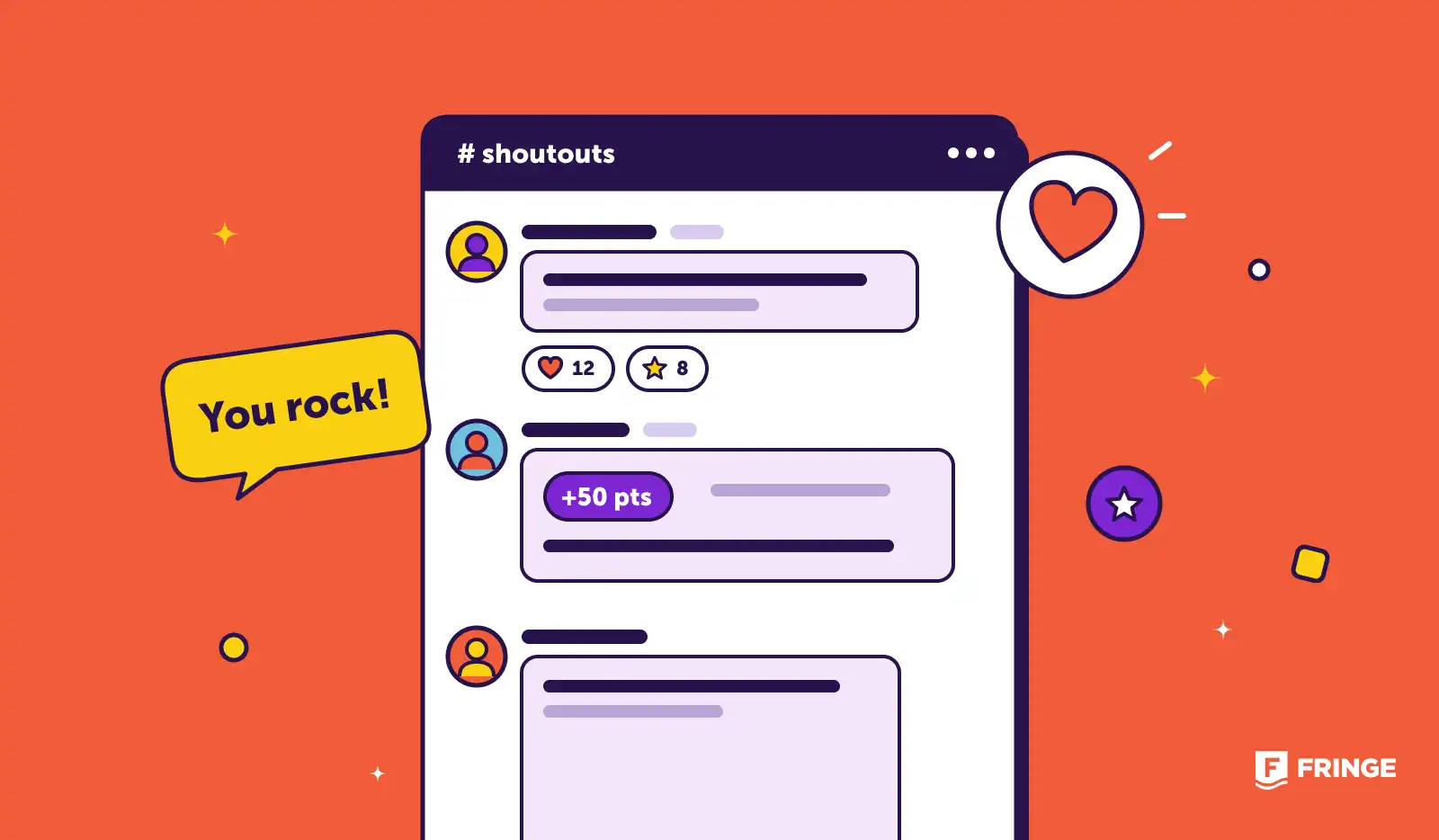
If sending a thank-you takes more than a few seconds, people won't do it. Put recognition where people already spend their day, in Slack or Teams. Make it visible to the team, because visibility is what turns a private compliment into culture. (Some people prefer private recognition, and that's fine. Give them the option.)
3. Tie it to your values
This is where peer recognition goes from nice to powerful. Without values, it can turn into a popularity contest: "Great work, you did well, it was fun working with you." It doesn't have much depth. Attach a value, and it says something real. At Fringe, one of our values is "we act with courage." When a peer recognizes someone for that specifically, everyone reading the feed learns what courage looks like here. Values that just sit on a document get forgotten, because there's nowhere in the workflow where they come back up. Recognition is the perfect place to put them back in front of everybody. You don't have to tag a value every time. Sometimes you're just saying "thank you, I'm glad you're here," and that's okay too.
4. Add points or rewards
Words matter most, but giving people a small number of points to attach to a recognition gives the moment weight. It also puts praise on the record, so nobody's surprised at review time. Let employees redeem those points for something they actually want, not a one-size-fits-all reward. If you're building a broader program around this, here's a guide to employee recognition programs from the ground up.
5. Keep it going
This is where most shoutout channels die. They start with excitement. Then no one does it. No one jumps in. Recognition only works when it's consistent and when everybody's bought in. It's usually not a culture problem. It's a systems problem. So build the system. Watch your sender numbers, not just your receiver numbers. When Nissin International Transport USA rolled out recognition, 92% of eligible employees were recognized in the first quarter, but 141 people, just under half, did the sending. That's a strong start, and it shows where the work is: turning receivers into senders. Then add champions on every team, a manager habit of recognizing weekly, a reason to come back, like a monthly challenge or a running goal, and peer-to-peer recognition software that keeps it in the flow of work instead of one more thing to remember.
Peer-to-Peer Recognition Examples and Ideas
Here are some peer recognition ideas and peer-to-peer recognition examples that actually get used.
1. Values shoutouts. A public note that names the value someone showed. Something like: "Huge thanks to [name] for pushing back on that client plan when it would've been easier to stay quiet. That's courage."
2. Shout-Out Week. Lemonade ran a company-wide challenge built entirely around recognizing each other. 92.9% of their remote team participated. You can set up the same thing with challenges and incentives.
3. A recognition goal for the whole company. Nissin set a goal of 26,000 recognition points in a quarter and sent a weekly email with the running total. They hit 28,412, across 1,230 recognitions. Recognition that used to be reserved for a handful of quarterly award winners now reaches peers and cross-functional teams across the company.
4. Read the feed out loud. Open your all-hands by reading three peer shoutouts from the past month. It takes two minutes and tells everyone this stuff gets noticed at the top.
5. Cross-team thank-yous. Encourage people to recognize someone outside their own team at least once a month. Otherwise recognition tends to circle inside the same friend groups, and it starts to feel like a popularity contest.
6. New hire welcome wall. In someone's first week, teammates post a welcome and one thing they're already glad the new person brings.
7. Weekly wins thread. Every Friday, a thread where anyone can call out a teammate's win from the week.
8. Points for the assist. Recognize the people behind the scenes who made someone else's success possible. They're the ones most likely to get missed.
Make Peer Recognition Effortless With Fringe
The best peer recognition is built into your culture and your workflows, so it's just part of the day.
That's what we built Fringe for. Employees recognize each other right inside Slack and Teams, publicly or privately, with points attached or not. Every recognition can carry points employees redeem for real rewards they choose: meal delivery, fitness, streaming, childcare, travel, and hundreds of other options. Birthdays and work anniversaries are automated, budgets can be set by team or manager, and dashboards show who's engaging, what's being rewarded, and trends in team morale.
We spend a third of our lives at work. We ought to give each other more than tasks and formal responses. Our peer-to-peer recognition software makes it easy to treat each other like human beings. Request a demo to see how it works.
FAQs
What Does Peer-to-Peer Recognition Mean?
Peer-to-peer recognition means employees acknowledging and thanking each other directly, rather than recognition only flowing from managers or leadership. It's usually quick, specific, and visible to the team, often shared in Slack or Teams. Many programs let peers attach points or rewards, so the thank-you carries tangible weight.
How Do You Give Peer-to-Peer Recognition?
Be specific and timely. Name the person, say exactly what they did, and explain why it mattered, ideally tying it to a company value. Share it soon after it happens, publicly if they're comfortable with that. If your company uses points, attach some so the recognition becomes something they can actually use.
What Are the 4 Types of Recognition?
Most frameworks name four: peer-to-peer, manager-led, milestone, and non-monetary recognition. Peer-to-peer is the one that supplies volume and frequency. Managers can't see every assist, and milestones only come around once a year, so peers fill in the weeks between. It works best alongside the other three, with managers going first and milestones automated.
What Are Good Peer Recognition Ideas?
Good peer recognition ideas include values-based shoutouts in Slack or Teams, a company-wide Shout-Out Week challenge, reading peer shoutouts aloud at all-hands, cross-team thank-yous, a weekly wins thread, and welcome posts for new hires. The best ideas are easy to do, visible to the team, and specific about what the person did.
Does Peer-to-Peer Recognition Need Software?
Not to start, but it helps it last. You can begin with a Slack channel and a habit. As you grow, software makes recognition easier to send, visible across teams, tied to your values, and connected to points and rewards. It also gives you data on participation, so you can see who's engaging.